
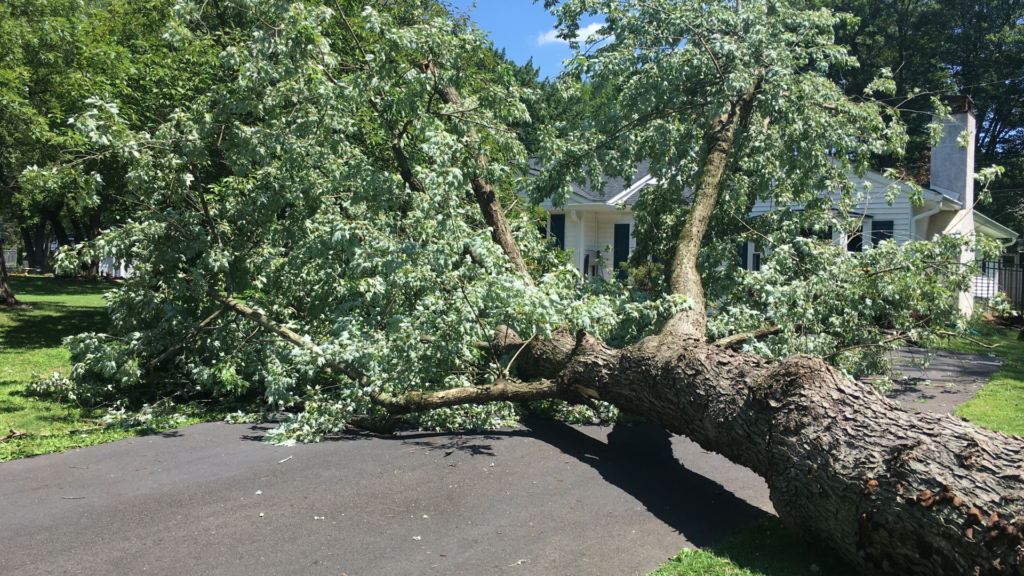
Fall in the Willamette Valley means the rain is back. The ground soaks up week after week of it, and then the first big windstorm rolls through. Most trees ride it out. The ones that don’t usually give a warning first, if you know what to look for.
If you already worked through our rainy season prep guide, this is the next step. Here’s what to watch for once the weather turns, and what to do if a storm damaged tree is already in your yard in Albany, Corvallis, Lebanon, Philomath, or anywhere else in the valley.
Why Wet, Windy Weather Is Hard on Trees
Wind alone rarely takes down a healthy, well-rooted tree. The trouble is wind on top of rain.
- Saturated soil loosens the roots’ grip. After weeks of rain, the ground around a tree can get soft enough that a strong gust levers the whole root plate up.
- Leaves act like sails. In October and early November, many maples, oaks, and other deciduous trees still carry a full canopy. That catches far more wind than bare winter branches.
- Summer stress shows up in winter. Trees weakened by heat and drought, like the ones we described in our summer tree stress guide, are more likely to drop limbs once the storms start.
7 Signs a Tree Could Fail This Season
Walk your property after a heavy rain or a windy night and look for these.
- A new or growing lean. A tree that has always leaned is less worrying than one that just started. Check the soil on the side opposite the lean. Cracking, heaving, or lifted turf means the roots are moving. This is the most common “tree leaning after storm” call we get.
- Dead or hanging branches. “You walk up to a tree and you see three big branches that are dead and hanging down,” says owner Hank McDonald. A broken limb hung up in the canopy can drop with the next gust.
- Cracks in the trunk or major limbs. Look for deep vertical splits or cracks where two large stems meet in a tight V.
- Mushrooms or fungus. Mushrooms at the base of a tree or conks on the trunk point to decay inside. See our guide on how to tell if a tree is dead or dying for more.
- Cavities, soft wood, or missing bark. A tree can look fine and still be hollow. On a recent crane removal next to a house, Hank’s crew found the tree was “completely rotten on the inside” with a huge rotten pocket.
- Exposed or lifting roots and standing water. Roots sitting in water for days lose strength fast, especially on low spots and clay soils.
- Branches over your roof, driveway, or power lines. Even a healthy limb is a problem if it’s hanging over the place you park or sleep. Regular tree trimming keeps that clearance in check.
Not Every Risky Tree Is Equally Urgent
Arborists don’t just ask “could this tree fail?” We also ask “what would it hit?”
“If the tree’s out in the middle of a farmer’s field, the likelihood it’ll hit somebody is pretty low,” Hank explains. “But if it’s next to the grade school and there’s 500 kids that walk by it every day, the impact zone is pretty significant.”
That’s the core of a formal tree risk assessment. It weighs how likely a tree is to fail against what’s underneath it: your house, your car, a play area, the road. Our arborists are ISA Certified with TRAQ qualification, the industry standard for this kind of evaluation.
What to Do After a Windstorm
If a storm has already done damage, take these steps in order.
- Keep everyone back. Stay well clear of the tree and anything it’s touching. Assume any downed or contacted wire is live, and call 911 and your electric utility.
- Look from a distance. Note leaning trees, split trunks, and limbs hung up in other branches. Take photos for your insurance company.
- Don’t cut anything under tension. Storm-bent limbs and uprooted trunks can be spring-loaded. When a cut releases that tension, the wood can snap back or roll without warning.
- Call for emergency help if it’s urgent. A tree on the house, blocking the only driveway, or leaning toward a structure needs emergency tree service, not a wait-and-see approach.
- Plan the cleanup. Once the hazard is gone, we can handle full tree removal and stump grinding on a normal schedule.
Why Storm Cleanup Isn’t a DIY Job
It’s tempting to grab a ladder and a pole saw the morning after a storm. Hank has seen how that goes.
A neighbor of his decided to trim the trees along his own driveway. He bought a pole saw, couldn’t quite reach the last limbs, and stepped up onto his truck’s tailgate. He slipped, separated his shoulder, needed surgery, and was out of work for three months. “It cost him a whole bunch of time and money,” Hank says.
Wet ground, slick bark, and storm-loaded branches make that kind of accident more likely. And what’s under the tree matters too: new concrete, a pool, landscaping, or the roof. One wrong cut can cost far more than the job itself.
Don’t Wait Until Spring on a Tree You’re Worried About
If a tree is leaning toward your house, don’t wait for the next storm to decide for you. Emergencies are handled right away. But a planned removal can involve permits. The City of Albany requires a permit and evaluation for some trees, including protected white oaks. Read our Albany tree removal permit guide for details. In Salem, the permit process alone can take two to four weeks. Starting early keeps you ahead of the worst weather.
For trees that just need thinning or deadwood removal, our month-by-month pruning guide shows the best timing.
Get a Storm Damaged Tree Looked at by a Local Arborist
Santiam Tree Service has served the Willamette Valley for 18 years, with more than 50 years of combined experience on our crew. We assess trees from the ground up, explain what we see, and respond fast when weather turns a concern into an emergency.
Spotted one of the warning signs above? Contact us for a free estimate, or see how we help homeowners on our storm readiness page.
Frequently Asked Questions
How can I tell if a leaning tree is going to fall?
A lean that is new or getting worse is the biggest warning sign. Also look for cracked or lifting soil on the side away from the lean, exposed roots, and standing water at the base. Any of these means it’s time for an arborist to take a look.
Is it safe to remove a broken branch myself after a storm?
Small branches lying on the ground are usually fine to pick up. Anything hanging in the canopy, under tension, near power lines, or that needs a ladder should be left to a professional crew.
What should I do if a tree falls on my house?
Get everyone out of the damaged area and stay clear of any downed lines. Then call 911 if anyone is hurt or wires are involved, contact your insurance company, and call an emergency tree service to remove the tree safely.
When should I have my trees checked?
After any major windstorm, and any time you notice one of the warning signs above. Trees close to the house, driveway, or power lines are worth an annual look.