
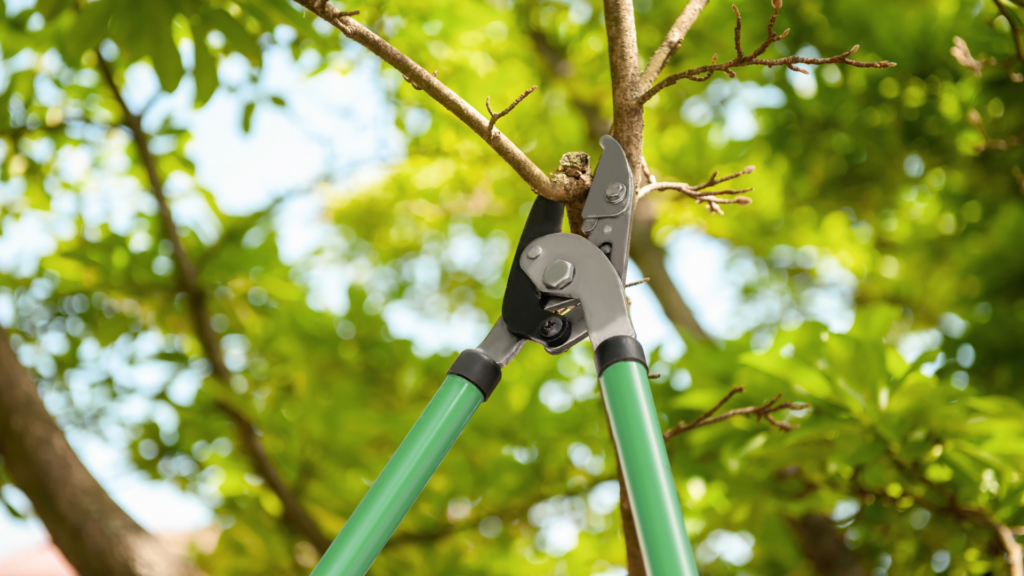
If you’re deciding when to prune trees in the Willamette Valley, the answer for most species is the dormant season, from late November through early March, on a stretch of dry days. The leaves are down, so you can see every branch, and cooler weather means fewer insects and fungi moving into fresh cuts. Stone fruit is the big exception: sweet cherries and plums do better with a summer cut after harvest.
That’s the short answer. The longer one depends on the species, the weather that week and what you’re trying to fix. Below is how our ISA Certified Arborists in Albany time pruning jobs across the year, what each common local tree prefers, and which cuts can’t wait for the calendar.
The Short Version: Winter for Most Trees, Summer for a Few
Here’s the rule of thumb we use on jobs from Corvallis to Lebanon:
- Deciduous shade trees (oaks, ash, most ornamentals): prune after leaf drop, November through early March.
- Fruit trees like apples and pears: late winter, January through early March.
- Sweet cherries and plums: summer, after harvest, in dry weather.
- Spring-flowering trees (dogwood, magnolia, flowering cherry): right after they finish blooming.
- Dead, broken or hanging limbs: any time of year. Don’t wait.
No branch should ever be removed without a reason. Every cut changes how a tree grows, so timing is only half of it. The other half is knowing which branches to take and which to leave.
Month-by-Month Pruning Calendar for Western Oregon
| Month | What to do | What to avoid |
|---|---|---|
| October | Remove deadwood and hazard limbs ahead of storm season. Book winter pruning now. | Heavy structural pruning while leaves are still on and fall rains are spreading fungal spores. |
| November | Start dormant pruning on deciduous trees once most leaves have dropped. | Working in steady rain. Wait for a dry window. |
| December | Prime month for shade trees and structural work. Branch defects are easy to see. | Pruning right before a forecast freeze or windstorm. |
| January | Dormant pruning for shade trees, apples and pears. Stone fruit only in a dry spell. | Cutting cherries or plums in wet weather. |
| February | Finish dormant pruning before buds swell. | Waiting too long. By March, some trees are already waking up. |
| March | Light shaping on conifers. Wrap up any late-winter fruit tree work. | Big cuts once buds break open. |
| April to May | Prune spring-flowering trees after bloom. | Heavy pruning during leaf-out, when bark tears easily and the tree has spent its stored energy. |
| June to August | Summer pruning of sweet cherries and plums after harvest. Light clearance cuts. | Removing a lot of live canopy during heat and drought. |
| September | Deadwood removal and storm readiness checks. | Big live cuts that push late, tender growth. |
We cover the summer side of this in more detail in our guide to summer tree pruning and shaping.
Why Winter Is the Best Time to Prune Trees in Oregon
With the leaves off, an arborist can read the whole structure of the tree, including weak unions and cracks that were hidden all summer. The tree isn’t pushing new growth, and most of the insects and fungi that move into fresh wounds are far less active in the cold.
Our winters are wet, though, and that matters. Rain splashing on a fresh cut is how a lot of tree diseases spread. So “winter” really means “dry days in winter.” When we schedule winter tree pruning, we’re watching the forecast and working the gaps between storms.
It also pays to get structural pruning done before the worst of the wind season. A tree with a thinned, balanced crown catches less wind than one carrying heavy, overextended limbs. If you’re worried about a tree ahead of the next big storm, a storm readiness inspection is the place to start.
Why Fall Is a Tricky Time in the Valley
Fall looks like a natural time to clean up the yard, and plenty of people reach for the pole saw in October. The problem is timing. Before leaf drop, the tree is still moving resources down into its roots for winter. Fall rains are also peak season for fungal spores. Big live cuts in October and early November hand those spores an open door.
Dead or broken wood is different. Removing it in fall is smart, especially before the first real windstorm. Those limbs are the ones that come down on cars, roofs and power lines. If you’re not sure whether a tree is dead or just dormant, our guide to the signs of a dead or dying tree walks through what we look for.
When to Prune Common Willamette Valley Trees
Oregon white oak
Winter is a good time to prune Oregon white oaks. You’ll see online advice telling you to prune oaks early to avoid oak wilt. That’s a Midwest disease, and according to OSU Extension it isn’t established in Oregon, so that timing rule isn’t the main concern here. The bigger issue with our oaks is going too far. Mature white oaks respond badly to heavy cutting, so we keep cuts small and purposeful.
If you’re in Albany, check the rules first. Albany protects white oaks, and you’ll need city approval before removing a protected tree. Our Albany tree removal permit guide covers that process.
Bigleaf maple and other maples
Maples bleed sap if you cut them in late winter or early spring. It looks alarming, but it rarely hurts the tree. If the dripping bothers you, prune maples in summer once the leaves are fully out, or early in the dormant season before the sap starts running. Bigleaf maples also sprout clusters of fast, weakly attached shoots after heavy cuts, which is one more reason to go easy.
Douglas fir and other conifers
Healthy Douglas firs need very little pruning. Most of our conifer work is taking out dead lower limbs, clearing roofs and driveways, and removing broken tops after storms. Late winter works well for any live shaping. Never top a fir. It leaves a weak cluster of new leaders that tends to fail in wind years later. If your firs are browning out, that’s a different conversation, covered in our post on Douglas firs turning brown.
Cherries, plums and other stone fruit
These are the exception to the winter rule. Stone fruit is prone to bacterial canker, which spreads in wet weather. OSU’s guidance is to delay dormant pruning until January or February and only prune when no rain is expected for at least a week. Summer pruning after harvest is even better. Apples and pears don’t share that problem and can go on the normal late-winter schedule.
Spring-flowering trees
Dogwoods, magnolias and ornamental cherries set next year’s flower buds the summer before. Prune them in winter and you’re cutting off the show. Wait until the blooms fade in spring.
Cuts That Can’t Wait for the Right Season
Knowing when to prune trees only matters for routine work. Some problems don’t care what month it is. Call an arborist right away if you see:
- A cracked or split limb hanging over the house, driveway or a play area
- A “hanger,” a broken branch caught up in the canopy
- Mushrooms or fungal growth at the base or on the trunk
- A tree that has started leaning after heavy rain
For anything that’s already come down or is actively failing, our emergency tree service crew responds across Albany, Corvallis and the rest of the valley.
Before You Grab the Pole Saw
Timing is the easy part. The ladder work is where people get hurt. Hank recently gave a neighbor up the street a price to trim the trees along his driveway. The neighbor decided to buy a pole saw and do it himself. He couldn’t quite reach the last limbs, stepped up onto his truck’s tailgate, slipped and separated his shoulder. That meant surgery and three months off work, to save the cost of one trimming job.
A few rules help, whoever’s doing the cutting:
- Take no more than about a quarter to a third of the live canopy in a season. OSU Extension recommends no more than one-third on overgrown trees.
- Cut just outside the branch collar, the slightly swollen ring where a branch meets the trunk. Don’t leave stubs, and don’t cut flush.
- Never top a tree.
- Stay well away from power lines. That’s utility and line-clearance work.
If a limb can’t be reached from the ground, or it’s big enough to damage something when it drops, that’s a job for a crew with the right gear. Our tree pruning and shaping service covers structural pruning, crown thinning and clearance work, and we haul away every branch when we’re done.
Oregon Rules to Know Before You Prune
Pruning on your own property usually doesn’t need a permit, but there are exceptions. Inside Albany city limits, you need a permit from the City Forester before pruning a street tree, and topping any street, public or heritage tree is against city code. Removing larger trees on private property needs a permit too. Corvallis, Salem and most other valley cities have their own rules for trees in the public right-of-way, so check before cutting anything near the sidewalk or street.
Branches hanging over your property line are a gray area. Oregon law sets steep penalties for damaging a neighbor’s tree without permission, so talk to your neighbor before you cut anything that isn’t clearly yours.
Frequently Asked Questions
When is the best time to prune trees in Oregon?
For most trees, late fall through late winter, after the leaves drop and before buds break. Pick dry days. Sweet cherries and plums are the main exception and do better with summer pruning after harvest.
Is it bad to prune trees in the fall?
Heavy pruning of live branches in early fall isn’t ideal in the Willamette Valley. Fall rains spread fungal spores, and the tree is still moving energy into its roots. Removing dead or broken limbs in fall is fine and helps before storm season.
Can you prune trees in winter when it’s raining?
It’s better not to. Rain splashing onto fresh cuts spreads disease, especially on fruit trees. Wait for a dry window of a few days.
How much of a tree can you prune at once?
As a rule, no more than about one-third of the live canopy in a season, and often less on mature trees. Taking more stresses the tree and usually triggers a flush of weak sprouts.
When should you not trim a tree?
Avoid heavy pruning during spring leaf-out, during summer heat and drought, and in wet fall weather. Dead, broken or hazardous limbs are the exception and can come out any time.
Do I need a permit to prune a tree in Albany?
Not for most trees on private property. You do need a permit from the City Forester to prune a street tree, and topping street, public or heritage trees is prohibited.
Getting Your Trees on the Winter Schedule
For most Willamette Valley trees, winter dormancy is the right time to prune, as long as you work around the rain. Stone fruit waits for summer, and deadwood comes out whenever you find it. The rest comes down to making the right cuts and not too many of them.
If you’d like an ISA Certified Arborist to look over your trees before the dormant season, we’ll come out, walk the property with you and give you a straight answer on what needs doing and when. Request a free estimate or call (541) 905-6674. We work across Albany, Corvallis, Lebanon, Philomath and the surrounding valley.