
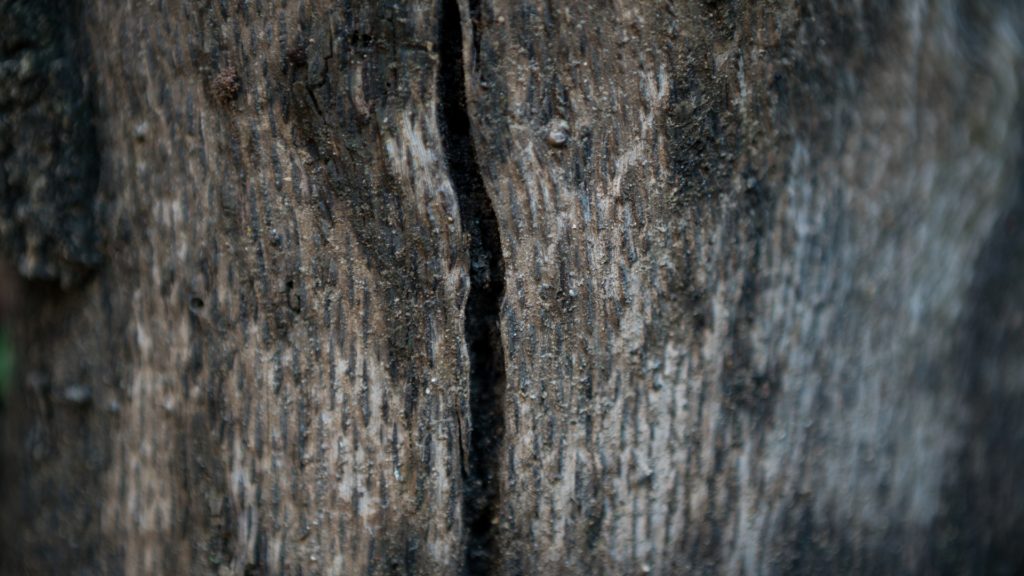
A big tree with a crack in it puts you in a tough spot. You don’t want to lose the shade, the privacy, or a tree that’s been in the yard longer than you have. But you also don’t want 40 feet of maple coming through the roof in January.
Sometimes there’s a middle option. Cabling and bracing can add support to a structurally weak tree and buy it years of safe life. Other times, no amount of hardware makes a tree safe, and removal is the honest answer. Here’s how our ISA Certified Arborists sort one from the other for homeowners in Albany, Corvallis, Lebanon and across the Willamette Valley.
What Tree Cabling and Bracing Actually Do
Cabling means installing a cable high in the canopy between two stems or limbs. When the wind hits, the cable limits how far those stems can move apart, which takes stress off a weak attachment point lower down. Systems range from steel cable with hardware anchored through the wood to newer synthetic “dynamic” systems that stretch slightly and let the tree move more naturally.
Bracing uses threaded steel rods installed through the trunk or a branch union. Rods hold wood together rigidly, so they’re used lower in the tree where a split has already started or a union is clearly weak. Bracing is usually paired with a cable above it.
Neither one fixes the defect. A cracked union stays cracked. What cabling and bracing do is reduce the odds that the weak spot fails, and limit how much comes down if it does. That’s why the decision always starts with an honest look at the tree, not the hardware.
When Cabling Is Usually Worth It
Cabling makes the most sense on a tree that’s healthy overall but has one specific structural weakness. The most common one we see is co-dominant stems: two trunks of similar size growing out of the same point in a tight V. Bark gets trapped in that V as the stems grow, and the union can split under wind or the weight of wet snow and ice.
A tree is usually a good cabling candidate when:
- The canopy is full and healthy, with no major dieback
- The weak union hasn’t started separating yet, or the crack is small and stable
- There’s no significant decay at the union or in the trunk
- The roots are sound and the tree isn’t developing a new lean
Here in the valley, that often describes bigleaf maples with multiple trunks and big Oregon white oaks with long, heavy limbs. Cabling is also commonly paired with pruning to lighten an overloaded limb, so the cable isn’t doing all the work.
When Removal Is the Safer Call
Hardware can’t hold up a tree that’s failing from the inside or from the ground. Removal is usually the better answer when you see:
- Significant decay. Mushrooms at the base, conks on the trunk, or soft, hollow wood mean the wood the cable would anchor into may not hold.
- A split that’s already wide or moving. If daylight shows through a crack, or it’s grown since last season, the union may be past saving.
- A new or worsening lean with cracked or heaving soil on the far side. That’s a root problem, and cables in the canopy won’t help.
- A dead or mostly dead tree. Cabling is for trees with years of life left.
Decay doesn’t always show from the street. On a recent crane removal next to a house, Hank’s crew found the tree was completely rotten on the inside, with a huge pocket of decay. No cable would have made that tree safe.
Owner Hank McDonald puts his default plainly: “When in doubt, cut it out.” That doesn’t mean every cracked tree has to go. It means that when an arborist can’t be confident a support system will hold, the safer choice wins.
What Sits Under the Tree Matters as Much as the Crack
Two trees with the same defect can get different recommendations. The difference is the target, meaning whatever the tree would hit if it failed.
A co-dominant maple at the back of a five-acre property near Lebanon might be worth cabling and watching, because a failure there lands in a pasture. The same tree leaning over a bedroom, a driveway or a play area is a different conversation. That’s the core of a formal tree risk assessment: weighing how likely the tree is to fail against what’s underneath it. Our arborists are ISA Certified with TRAQ qualification, the industry standard for that evaluation.
Protected Trees Change the Math in Albany
There’s a local wrinkle here. The City of Albany requires a permit and evaluation to remove some trees, and certain Oregon white oaks are protected. If a valuable oak has a weak union but is otherwise healthy, cabling may be the most practical way to keep it standing safely, and it avoids a removal you might not be allowed to do anyway.
Salem and other cities have their own rules too. Our Albany tree removal permit guide covers what to check before you plan either option.
Cabling Isn’t Set-and-Forget
Once a cable is in, it needs to be checked. Trees grow, hardware can loosen, and a cable can rub or get grown over. Plan on having cabled trees inspected regularly and after any major storm. A cable that’s been ignored for a decade can become part of the problem rather than the fix.
Installation matters as much as maintenance. Cable placement, hardware size and tension all follow industry standards (ANSI A300), and a poorly placed cable can damage live wood or shift stress to a new weak point. This is one job to leave off the DIY list, especially since it means climbing and working high in a compromised tree.
How We Make the Call
When we look at a tree with a crack or a weak union, we check the whole tree before talking options: canopy health, decay, the roots and soil, and what’s underneath. Then we give you a straight answer. If cabling and pruning will make the tree reasonably safe, we’ll tell you. If it won’t, we’ll tell you that too, and explain why.
If removal is the answer, the crew takes it down, chips the brush, hauls everything away and can grind the stump, so you’re left with a clean site.
Frequently Asked Questions
Does cabling hurt the tree?
Installed correctly, the impact is small. Through-bolted hardware creates small wounds the tree can seal off, and synthetic dynamic systems wrap around limbs without drilling. Poor installation is what causes damage, which is why it should be done by a qualified arborist.
How long does tree cabling last?
A properly installed and inspected system can stay in service for many years, but it isn’t permanent. Hardware should be checked and adjusted as the tree grows, and replaced when it wears.
Can a split tree trunk be repaired?
Sometimes. If the split is small, the wood is sound and the tree is healthy, bracing rods and a cable can hold the union together and slow further separation. If the split is wide, moving, or shows decay, removal is usually safer.
What’s the difference between cabling and bracing?
Cabling installs flexible support high in the canopy to limit how far stems move. Bracing uses rigid rods lower in the tree to hold a weak union or crack together. They’re often used together.
How much does tree cabling cost?
It depends on the tree’s size, how many cables or rods it needs, and access for climbing. Most of the cost is the climb and installation time. The only reliable number comes from looking at the actual tree, which is why our estimates are free.
Get a Straight Answer on a Cracked or Split Tree
Cabling and bracing can save a healthy tree with a single weak point. They can’t save a tree that’s decaying, uprooting or already splitting apart. And what’s underneath the tree matters as much as the crack itself.
If you’ve got a tree you’re on the fence about in Albany, Corvallis, Lebanon, Philomath or anywhere in the Willamette Valley, request a free estimate and one of our ISA Certified Arborists will take a look. Willamette Valley: (541) 905-6674. Portland Metro: (503) 308-0006. Licensed, bonded and insured, CCB #229652.