
Better, Safer, Faster.
When trees threaten safety, property, or peace of mind, Santiam Tree Service delivers the expert care you need – ISA-Certified Arborists, highly responsive, and committed to quality in every cut.
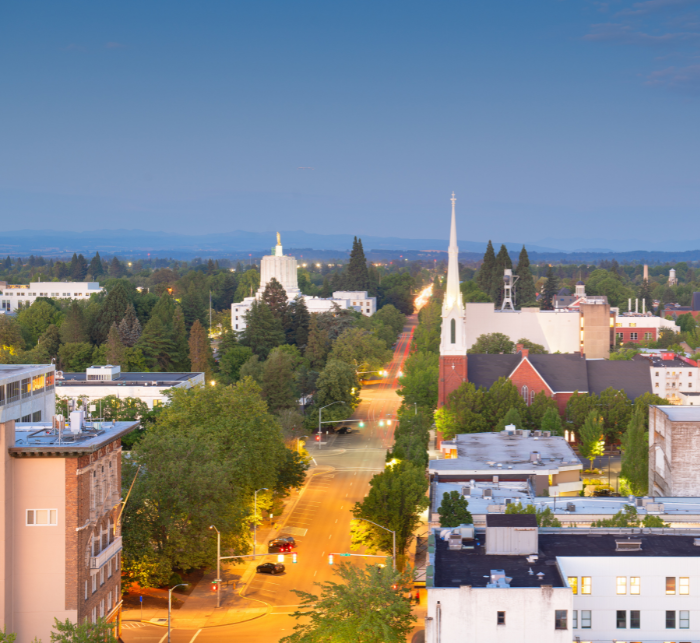
Albany is the Linn County seat and the town our crews work out of, so this is the one city where “local” isn’t a figure of speech. The city sits at the confluence of the Calapooia and the Willamette, which shapes almost everything about the trees here most of Albany is built on river-deposited soil, and the tree problems follow the water. Worth knowing: Albany spans two counties. Everything north of the Willamette, including North Albany, is in Benton County, which matters when a question turns into a county-level permit.
River-bottom soil grows big trees fast and then lets them go over. Along the Calapooia and the Willamette Bryant Park, Takena Landing, Bowman Park and the neighborhoods behind them the native mix is Oregon ash, black cottonwood, red alder and bigleaf maple. Cottonwoods are the ones we get called about most often after wind: they put on enormous limbs, hold them on weak attachments, and shed them without much warning.
On the drier prairie terraces away from the rivers, Oregon white oak is the signature tree, and it is worth preserving valley-wide, oak woodlands are down to about 7% of their historic extent.
Two things we’re watching. Douglas fir on thin or compacted soil is showing drought stress across the valley, and the flatheaded fir borer finishes off trees that are already struggling. And emerald ash borer, which kills Oregon ash, has been confirmed in Marion County about 20 miles north of Scotts Mills, Mount Angel, and Silverton. Linn County is not under quarantine and has no confirmed detection, but Albany’s riverfront is exactly the ash habitat it targets.
Albany has the strictest tree code of any city we serve, and most homeowners don’t know it. Under Albany Municipal Code 7.98.040(2), a permit from the City Forester is required to remove any tree measuring five and one-quarter feet or more in circumference, roughly 20 inches in diameter, on all property within city limits, not just in the right-of-way. The approval criteria in AMC 7.98.180 are narrow, covering hazardous trees, certified-arborist findings, overcrowding and a few development situations, and the section closes: “In all other cases, a tree removal permit shall be denied.”
Street-tree work needs a separate Tree Work Permit from General Services, which is free. Topping is prohibited on street trees, public trees, and heritage trees under AMC 7.98.090, with narrow exceptions for severely damaged trees and utility clearance. And if you’re clearing five or more trees of 8 inches or larger, that triggers site plan review under Albany Development Code 9.205–9.208.
We pull these permits as part of the job.
Helpful guide: Tree Removal in Albany: What Homeowners Need to Know →
Every cut on a tree influences how it grows. A branch should never be removed without a clear purpose. Pruning requires an understanding of how each cut will affect the tree’s future shape and health.
Trimming not only enhances the look of your trees, but also extends their lifespan by eliminating branches that are dead, weakened, diseased, or infested with insects.
Since many property owners prefer not to have stumps excavated, our tree experts can instead grind them 4″ to 6″ below ground level with specialized equipment. The wood chips and soil are then used to fill the hole, making stump grinding the simplest and most cost-effective solution.
With ISA Certified Arborists on our team, you can count on expert care for your trees. We offer thorough risk assessments, professional evaluations of tree health, and tailored care plans designed to enhance both safety and longevity. Rely on our specialists to identify potential hazards and guide you toward the best solutions for your property.
Probably, if it’s a large tree. Albany Municipal Code 7.98.040(2) requires a City Forester permit for any tree 5.25 feet or more in circumference — about 20 inches in diameter — anywhere inside city limits, including private property. Smaller trees generally don’t require one. We handle the permit as part of the job.
In most cases it belongs to the City of Albany. Trees in the public right-of-way are city trees, and any pruning, planting or removal needs a Tree Work Permit from General Services. There’s no fee for the permit, but doing the work without one is a code violation.
No, and we’d say the same anywhere. Albany prohibits topping street trees, public trees and heritage trees outright under Municipal Code 7.98.090 — and we don’t top private trees either, because it’s bad for the tree. Topping forces weak, densely clustered regrowth that fails in exactly the storms you were trying to protect against. What we do instead is crown reduction and clearance pruning, which gets you the same separation from the structure without destabilizing the tree.
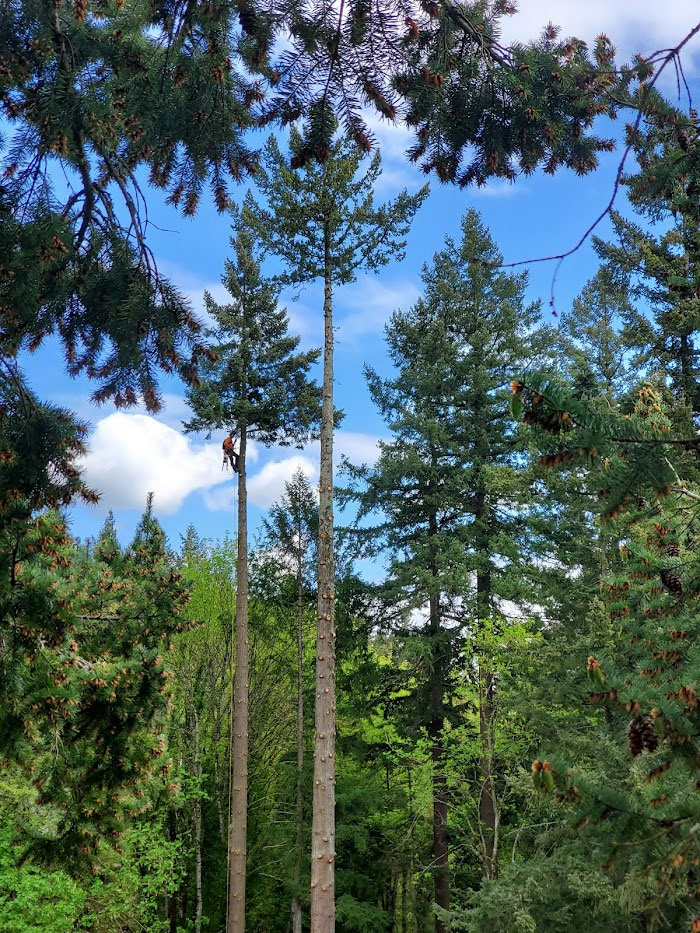
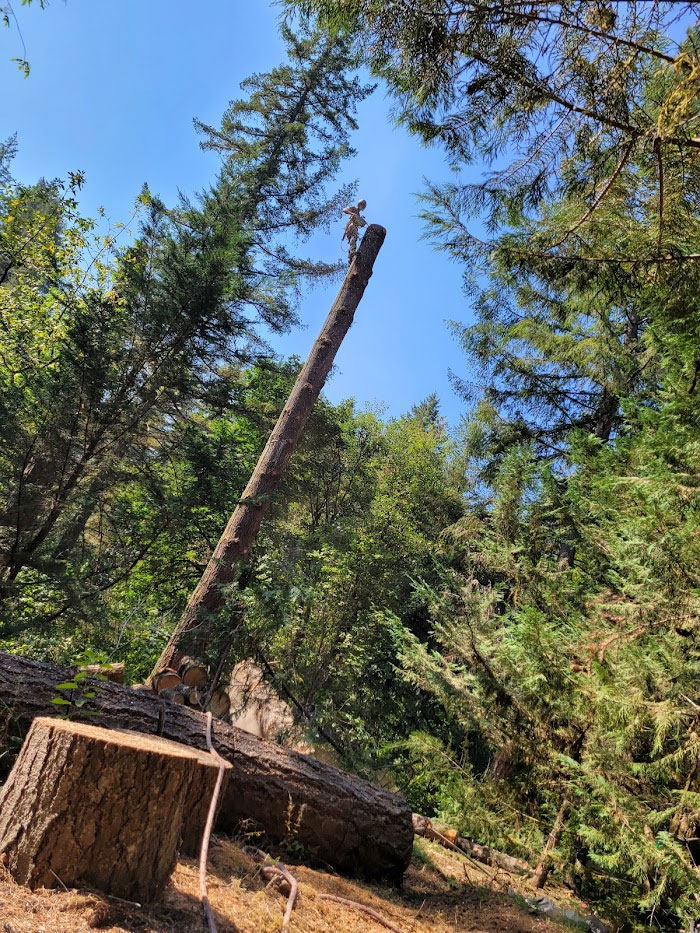
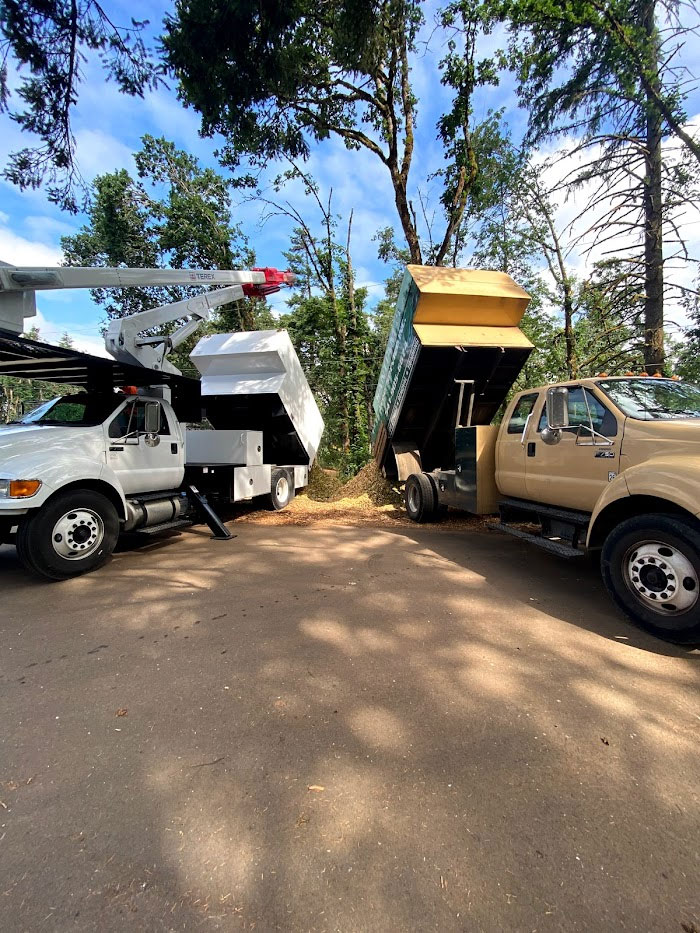
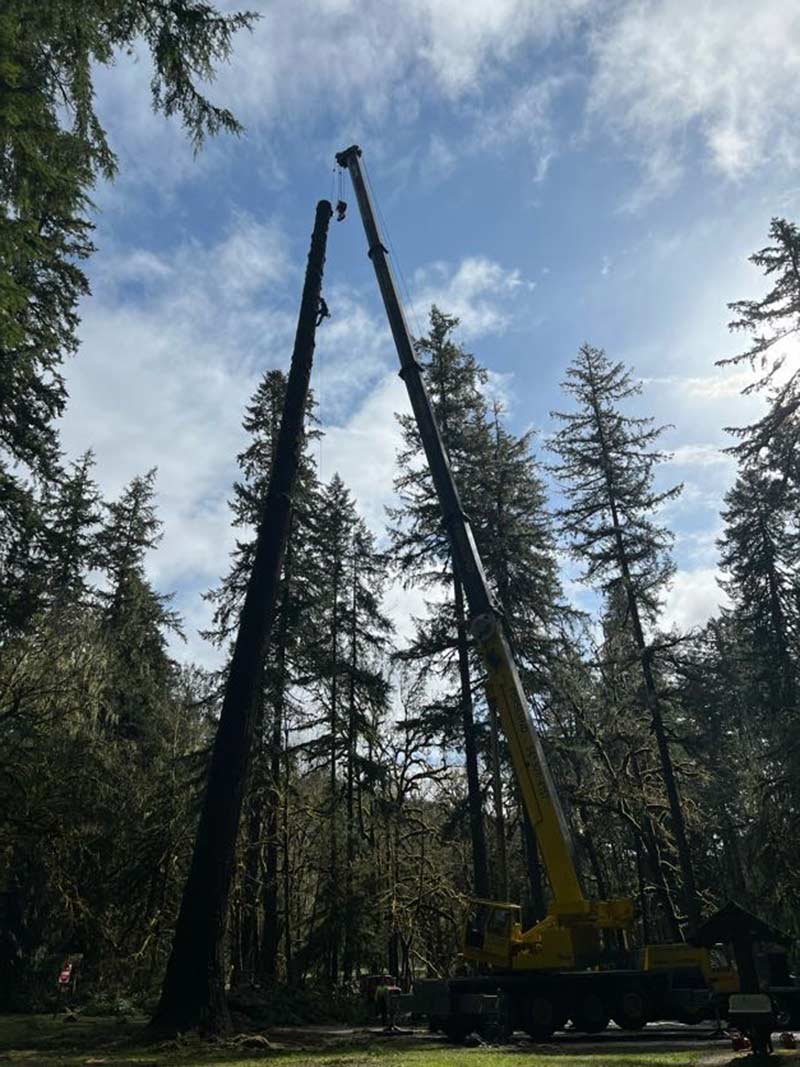
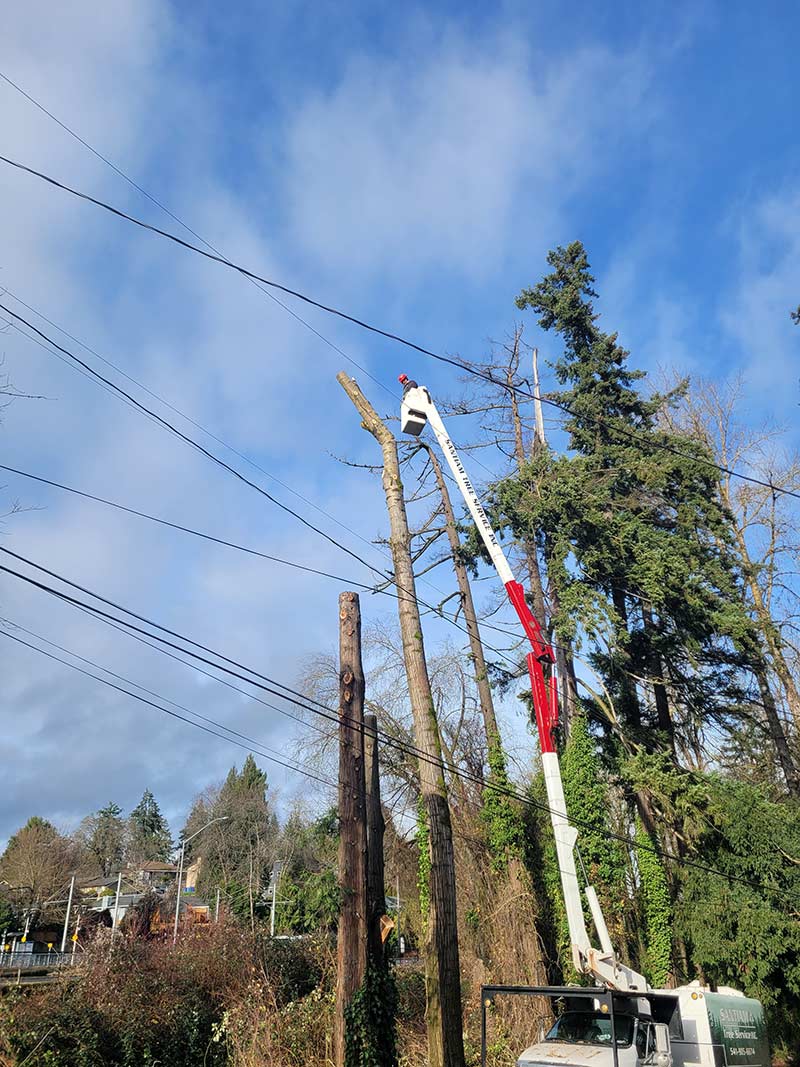
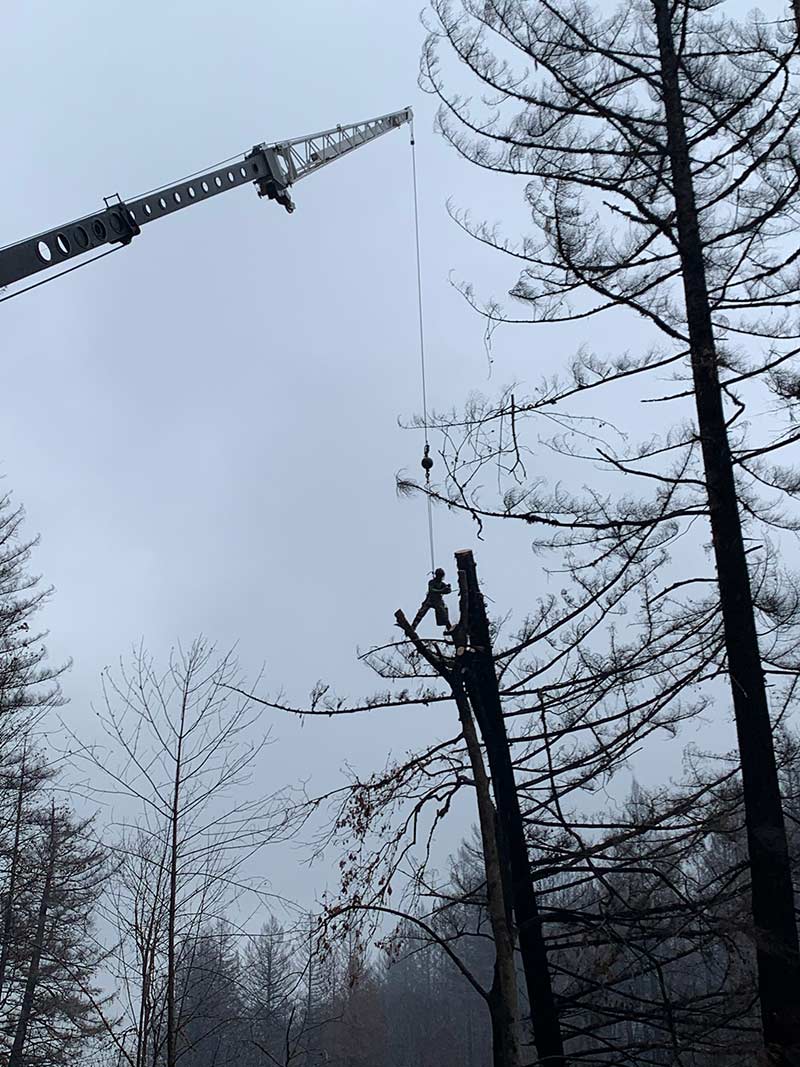
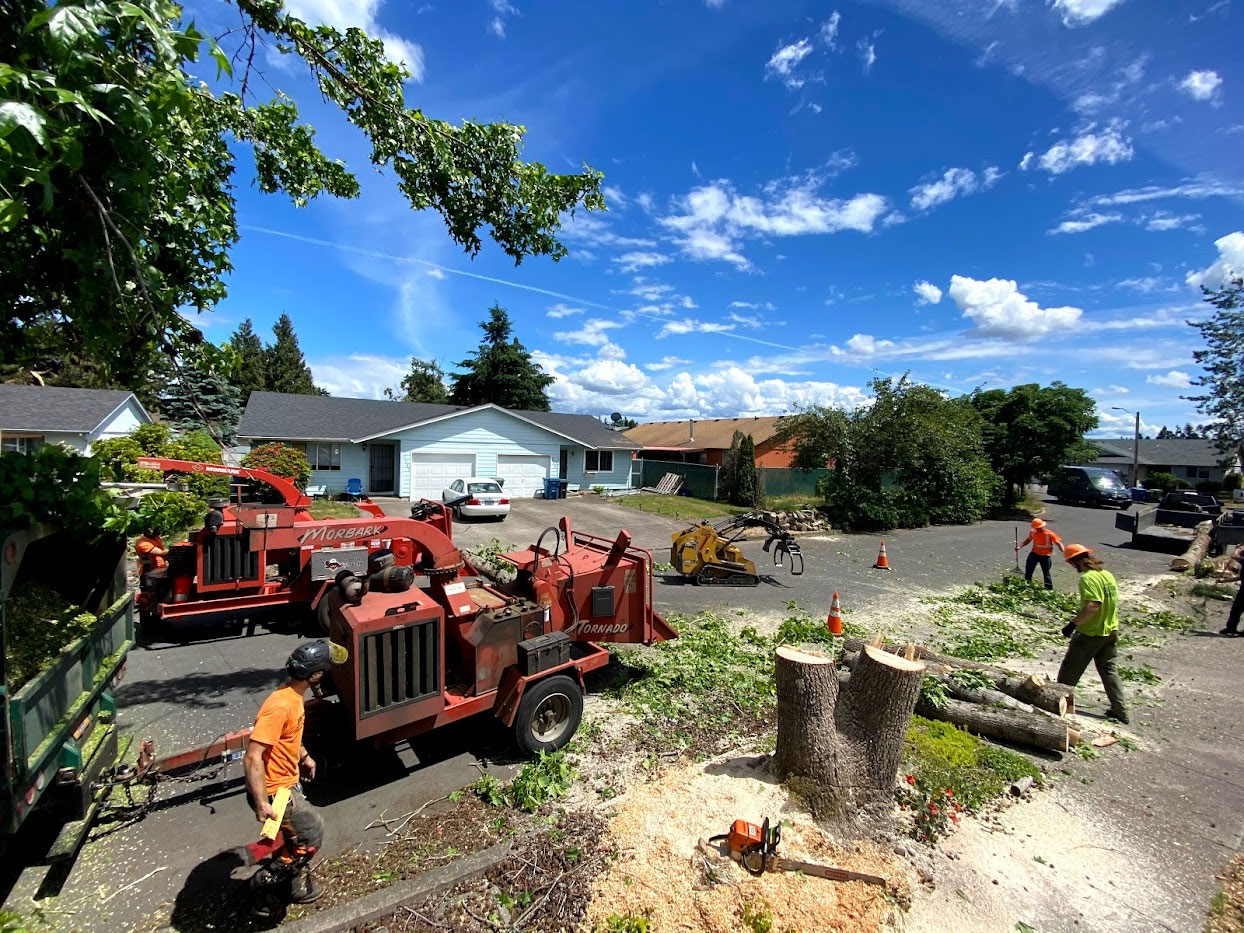
We’re based here, so Albany calls generally get same-day or next-day scheduling, and emergency work usually faster. We cover the whole city — the Monteith and Hackleman historic districts, downtown, the neighborhoods around Timber Linn and Waverly Park, Periwinkle, Gibson Hill, and across the river in North Albany.