
Summer Tree Pruning and Shaping: What Willamette Valley Homeowners Should Know
Summer is the season most homeowners notice their trees. Canopies are full, branches are hanging lower, and the tree that’s been fine for three years is suddenly blocking the driveway or casting more shade than you wanted.
That attention is useful. But whether summer is the right time to act on it depends on the tree, the goal, and the type of work you’re considering. Not every pruning job belongs in July. Here’s what the ISA Certified Arborists at Santiam Tree Service recommend for homeowners in Albany, Corvallis, and Philomath.
Is Summer a Good Time to Prune Trees?
For some trees and some objectives, yes. For others, it’s the wrong time entirely.
Summer pruning works well when the goal is light shaping, removing dead or damaged wood, improving clearance, or correcting structure on fast-growing species. With leaves on, you can see exactly where the canopy is dense, where weight is concentrated, and which branches are crossing or rubbing. That’s harder to read in winter.
The Risk: Willamette Valley trees are already managing heat and drought stress by late July and August. Removing live wood stresses the tree further, and large cuts in summer take longer to compartmentalize than the same cuts made in late winter.
No branch should ever be removed without a valid reason rooted in ISA Certified Arborist training, not marketing language. Every cut opens a wound. The tree’s ability to close it depends on timing, species, and how the cut is made. Oregon summers run dry in a way that changes the calculus compared to wetter climates; a tree that’s transpiring heavily through a full canopy in August isn’t in the same condition as one pruned in February.
Which Trees Benefit From Summer Pruning?
Different species react differently to the summer heat. Here is a quick breakdown of how to approach common Willamette Valley trees:
| Tree Type | Summer Pruning Status | Recommendations & Timing |
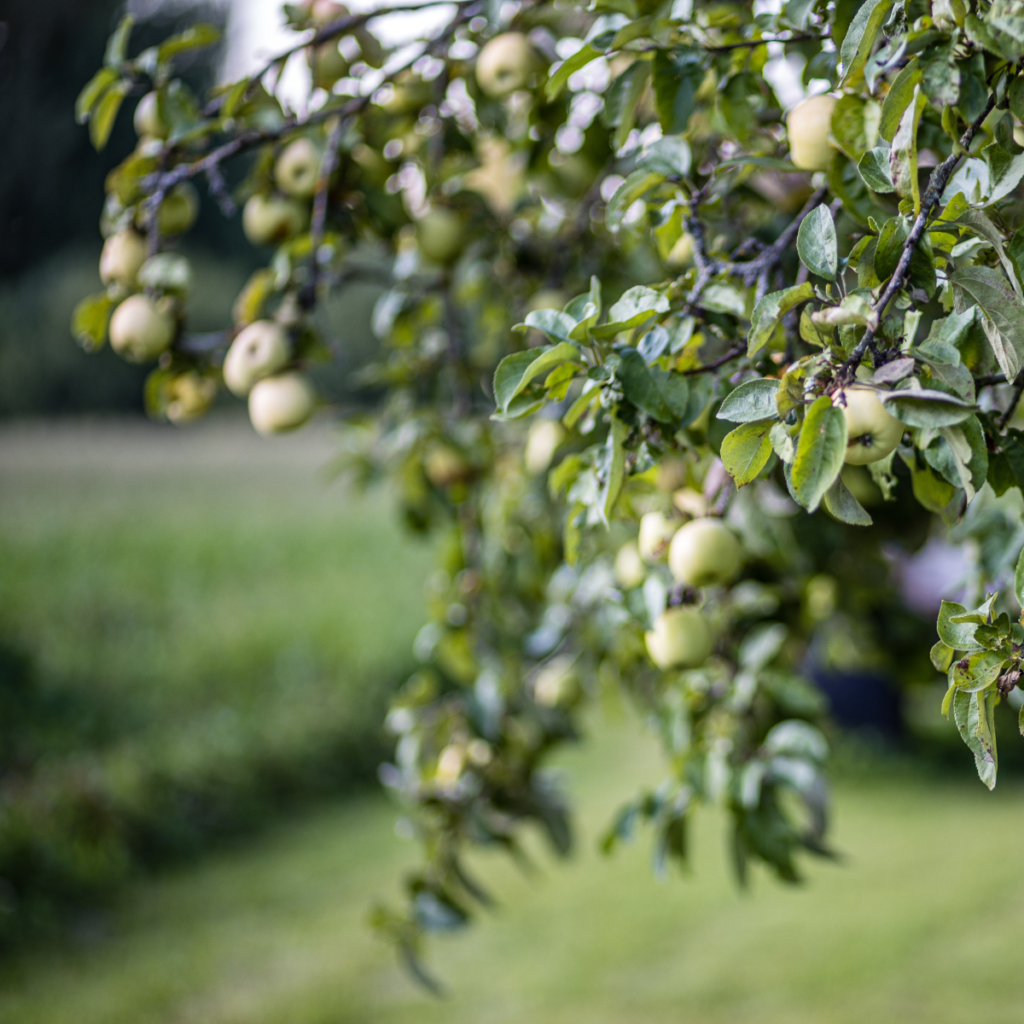
| Fruit Trees (Apples, Pears, Cherries) | Excellent | Redirects energy toward fruit production and improves airflow. Many orchardists prune in late winter for structure, and again in summer to manage growth. |
| Oregon White Oaks | Caution / Limited | Fine through late June, but pull back by July. Avoid making cuts during peak beetle and fungal activity to prevent oak disease. |
| Maples & Ornamentals | Good (Light Only) | Can handle light summer pruning without issue. Keep the work confined to removing dead wood and correcting a few crossing branches. |
| Conifers (Doug-Fir, Pine, Spruce) | Avoid | Leave them alone in the summer heat. Fresh cuts attract bark beetles, which are an ongoing threat in Oregon. Wait until late fall or winter. |
Shaping vs. Structural Pruning: Not the Same Thing
There’s a distinct difference between shaping and structural pruning, and conflating the two leads to long-term problems.
- Shaping is aesthetic: It brings a tree into a form that works for the property. It’s light work, usually touching branch tips and smaller limbs. Done correctly, it improves the look without compromising the tree’s health.
- Structural pruning addresses architecture: This focuses on how the main branches are spaced, whether co-dominant stems are competing for dominance, and whether weight distribution creates a safety hazard. This kind of work has longer-lasting consequences.
What most homeowners don’t see immediately is that a tree shaped incorrectly—especially one where cuts were made too close to the trunk or where the branch collar was removed—can take years to show the damage. The visual result looks fine right after the work, but the rot sets in later. An ISA Certified Arborist evaluates both aesthetics and architecture to make recommendations based on the tree’s actual condition.
Signs Your Trees Need Attention This Summer
- Deadwood: This is easiest to identify in summer. A dead branch won’t leaf out, standing out clearly against a full green canopy. It should come out before the first fall windstorm, when wet weight makes dead branches unpredictable.
- Crossing Branches: Branches that rub against each other create wounds on both limbs, which become immediate entry points for disease and decay.
- Clearance Issues: Branches hanging over driveways, pushing toward structures, or running close to rooflines are better dealt with on your schedule than after a storm forces the issue.
- Lion’s-Tailing: This is a damaging pattern to watch for if an unqualified crew previously worked on your trees. It means stripping all interior foliage and leaving growth only at the tips. It weakens branch structure and creates a dangerous “wind-sail” effect.
What a Professional Summer Pruning Looks Like
Santiam Tree Service’s ISA Certified Arborists walk the property first. They assess the species, structure, visible signs of disease or decay, and the surrounding environment before any cuts are even discussed.
For instance, just last week in Corvallis, our crew trimmed back an overgrown cherry tree that was blocking a homeowner’s driveway, carefully thinning the upper canopy to improve airflow and boost this summer’s fruit yield without over-stressing the tree.
The crew handles everything from there: climbing or rigging as the job requires, cutting to strict ISA pruning standards (ANSI A300), chipping brush, and hauling everything away. By the time they leave, the canopy is safe, healthy, and exactly where it needs to be, and the site is left completely clean. That’s the standard on every job in Albany, Corvallis, Philomath, Lebanon, and throughout the Willamette Valley.
Balancing Aesthetics and Tree Health
Summer pruning is an excellent tool for maximizing the beauty and immediate safety of your property, but it requires a delicate touch. Because Oregon summers place unique drought and heat stressors on our local canopy, the line between helpful maintenance and unintended damage is incredibly thin. By understanding what your specific trees need—and leaving the heavy structural corrections for the dormant season—you can keep your landscape vibrant and resilient all year long.
If you have trees in Albany, Corvallis, Philomath, or anywhere in the Willamette Valley that need attention before the fall storm season, Santiam Tree Service can take a look.
ISA Certified Arborists with TRAQ Qualification
Licensed, Bonded, and Insured — CCB #229652